

The Value of Land – Prosperous lands and positive rewards through sustainable land management
The values of land
Immediate agricultural or forestry market values commonly determine land’s economic value. This narrow market perspective chronically undervalues land and often incentivises the maximisation of short-term gains. As a result, resources are overused, land degrades, and intact ecosystems are lost.
One of the key drivers? Our failure to account for the true values of land.
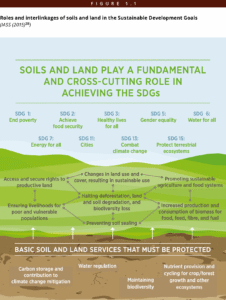
Land ecosystems provide a whole range of other, less visible services that are important for societies and economies as well, such as water filtration, pollination, erosion control or carbon storage. Measuring and accounting for these “hidden” services is imperative.
The numbers show: The global value of the world’s ecosystem services is up to $145 trillion per year, 1.5 times the global GDP. On the other hand, losing land leads to services being lost worth $10.6 trillion every year (ELD-main-report_en_10_web_72dpi.pdf)
“The global value of the world’s ecosystem services is up to $145 trillion per year,
1.5 times the global GDP“
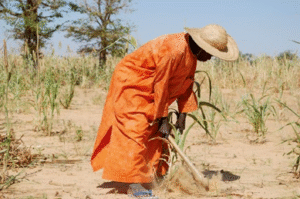
The good news: Restoration and conservation pay off.
Taking the full suite of ecosystem service values into account often makes a compelling economic case for sustainable land management, conservation and restoration of land resources. Evidence shows that every dollar invested in restoring degraded land results in a return of 7– 30 $ in economic benefits (UNCCD 2022).
The Value of Land Report introduces the ELD Initiative and its 6+1 approach, highlighting the importance of valuing ecosystem services, the potential of sustainable land management to mitigate land degradation, as well as pathways for stakeholders’ engagement and perspectives.
Find more information on why to value land here: Why value land? – ELD Initiative
Read the full report here: ELD-main-report_en_10_web_72dpi.pdf