
Social Innovations – Italy
Social innovation approach for addressing depopulation
In Italy, biophysical pressures are part of the desertification equation. Yet, over time, demographic decline and land abandonment have assumed a growing influence, reshaping the conditions under which these physical processes unfold.
The thinning of local populations, the ageing of rural communities, the gradual withdrawal of essential services, and the retreat of agricultural and pastoral practices, collectively weakens the everyday forms of land stewardship that historically mitigated environmental risk. In this altered socio-ecological landscape, vulnerabilities linked to soil degradation, hydrogeological instability, and biodiversity loss tend to become more pronounced.
Because of this distinct socio-economic pathway, the Italian pilot does not introduce technological innovations. Instead, it focuses on social innovation as the main solution domain capable of revitalising local resilience, rebuilding relationships between communities and landscapes, and disrupting the abandonment–degradation cycle. Social innovation is therefore presented as a dedicated and coherent pathway fully aligned with TERRASAFE’s multi-actor principles and the broader objectives of Mission Soil.
These processes reduce the community’s ability to care for landscapes, maintain ecological functions, and ensure sustainable land use. Addressing these challenges requires solutions capable of reactivating territorial capital, rebuilding social cohesion, strengthening local institutions, and fostering new forms of collective governance.
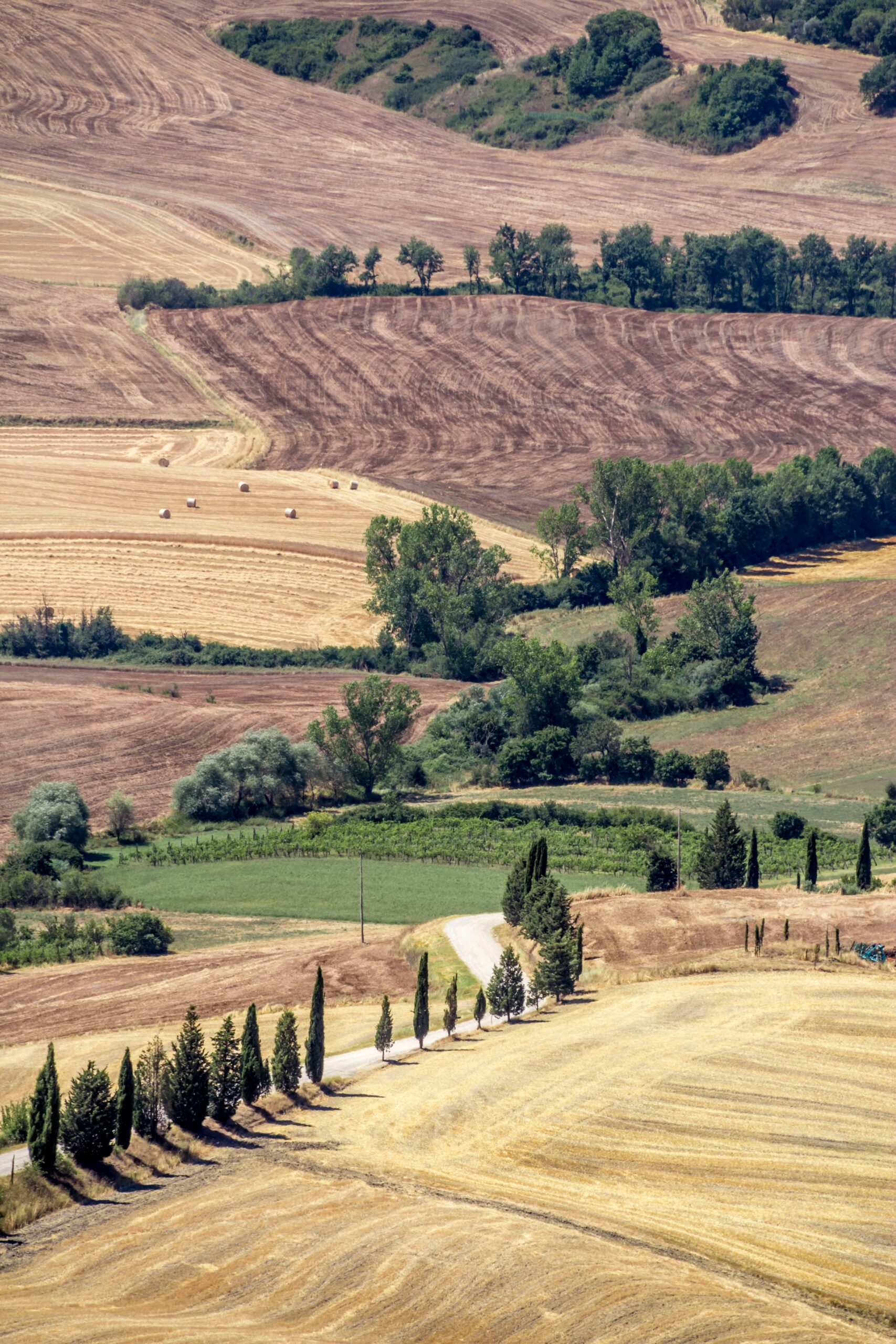
SETA area – Community Cooperative
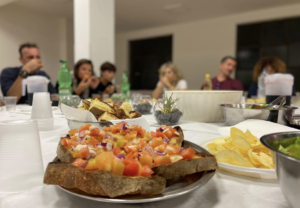
The Community Cooperative is a multi-purpose social enterprise managing local services, cultural and tourism initiatives, resource stewardship, and small-scale welfare or mobility services.
The project was selected because it addresses service fragmentation, limited opportunities for young people, and the need for new multi-actor governance models.
The key actors involved are municipalities, citizens, local businesses, farmers, cultural associations, and LAG/territorial development bodies.
Potential impacts identified by stakeholders are to strengthen social cohesion, support economic diversification, enhance community governance and to promote the stewardship of local assets.
MOMA Area – Zero-Kilometre school canteen
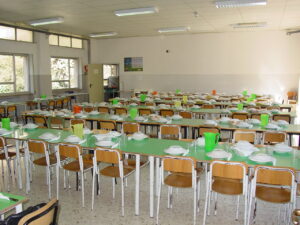
Zero-Kilometer school canteen is a school-based community service integrating local food supply chains, healthy nutrition, sustainability practices, and active involvement of families and local farms.
The project was selected because it builds on strong agricultural resources, existing school facilities, and local interest in healthy, sustainable food practices.
The key actors involved are schools, municipal administrations, families, local farmers and food producers, associations promoting sustainability and education.
Potential impacts identified by stakeholders are to reinforce educational and social capital, support local agriculture, promote environmental practices and sustainable behaviours and improve community cohesion through shared responsibility.
View some of our latest news!

Our latest TERRASAFE newsletter is out
In this edition, we go behind the scenes of ongoing work across Europe and North Africa, from emerging field insights to new research on land degradation. Highlights… Interview with Mark Schauer, Economics of Land Degradation We interviewed Mark Schauer,...

Desertification and soil salinisation in Tunisia: why does it happen and what’s the solution?
Excessively salty soil is one of the biggest threats to agriculture and food security. In this blog, Dr Nissaf Karbout explains why soil salinisation is degrading critical cropland in Tunisia and considers what the future holds for farmers in the region. Globally,...

Carob – a future-food that can grow in dryland areas
By Dr Charlotte Chivers Summary: Carob, a drought-tolerant Mediterranean tree, is gaining attention as a climate-resilient crop for drying regions where traditional agriculture is struggling. Mature trees survive on minimal rainfall and poor soils, though seedlings...