
who we are
TERRASAFE includes 13 framework and pilot area partners, alongside 5 innovation partners.
Click on the logos below to meet our individual partners!
CEBAS
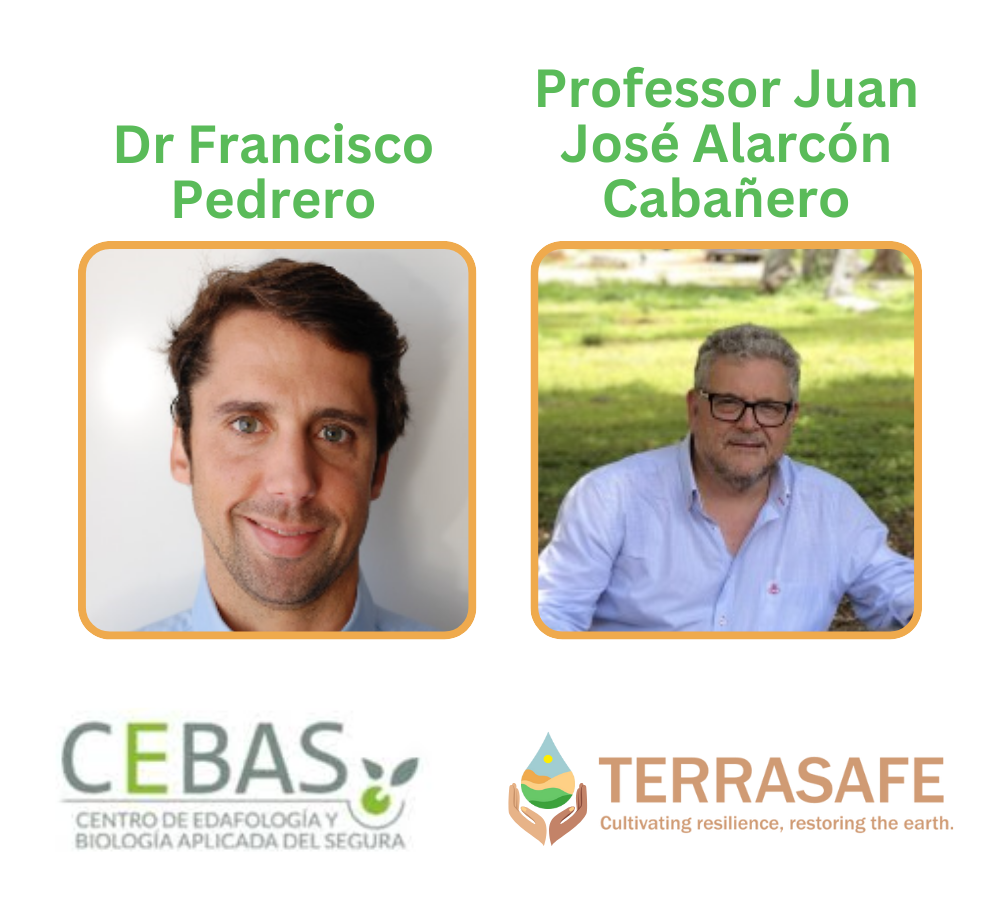
Consejo Superior De Investigaciones Cientificas (CEBAS) is a Public Research Organisation, the scientific institution of reference in Spain and one of the most prominent in the European Research Area. CEBAS is responsible for both its pilot area and contributing its expertise to WP4.
University of Aveiro
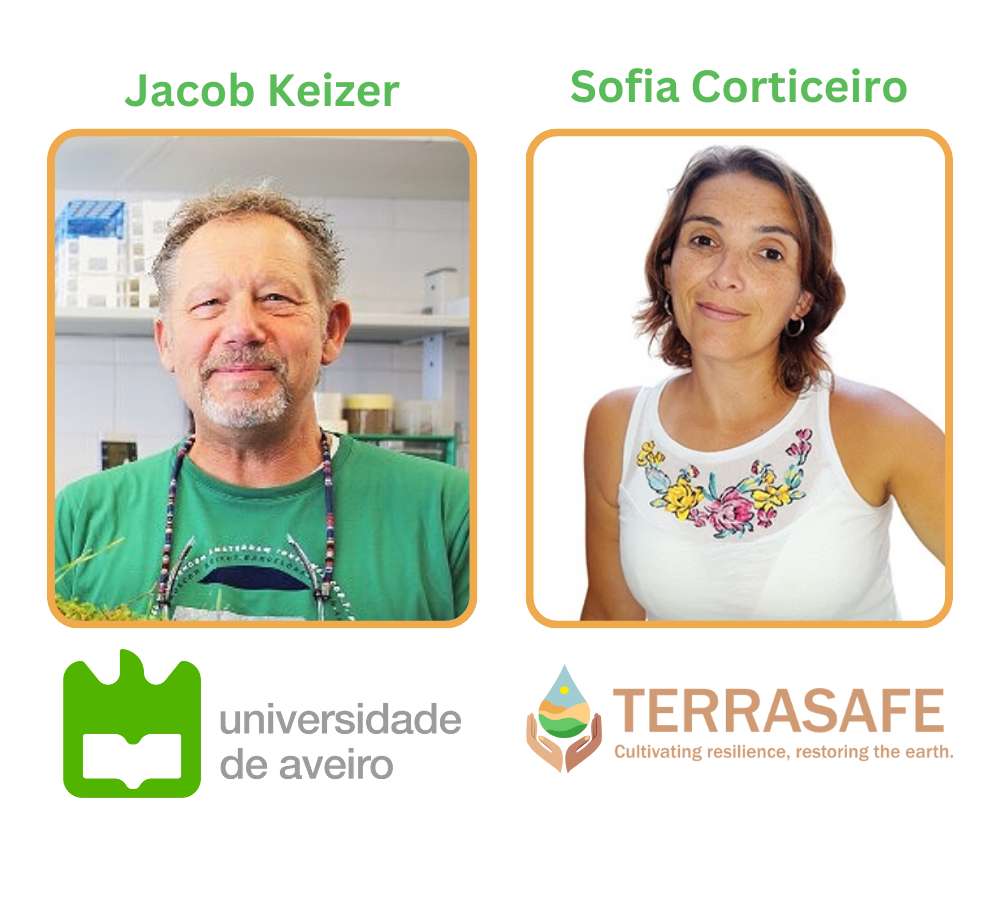
The University of Aveiro is a public university which won the award “Campeões das Zonas Áridas” (Champions of the Arid Zones) a few years ago. This prize, promoted by the UNCCD, distinguishes individuals, companies or institutions that have significantly contributed to sustainable land management. With this recognition, UAVR leads the TERRASAFE project (WP1) and takes advantage of its expertise on land degradation and its prevention/mitigation through WP3 and WP4.
Universita degli Studi della Basilicata
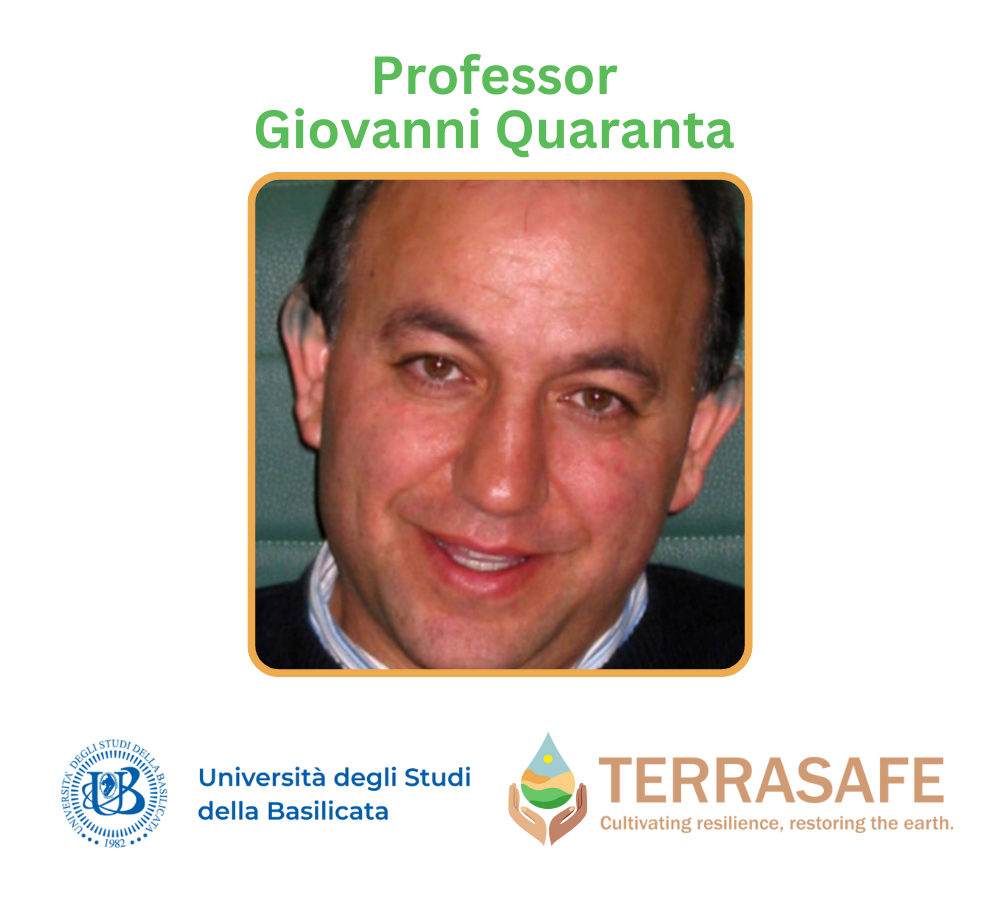
The University of Basilicata (UNIBAS) is renowned for its expertise in policy assessment and recommendation, consistently contributing to informed decision-making. With a dedicated focus on research and collaboration, it actively engages with the public and private sectors to provide impactful insights. Through its multidisciplinary approach, UNIBAS plays a pivotal role in shaping effective policies that address diverse societal challenges (WP5).
ICAS
The National Institute for Research and Development in Forestry (INCDS) is certified as a nationally important Research and Development institution and an Excellence Centre in Forest Biology and Management by the national authority. The INCDS has the expertise to conduct the Romanian pilot area on reforestation and vegetation management.
Agrobiogel
Agrobiogel Gmbg (ABG) is a spin-off company from the University of Natural Resources and Life Sciences, Vienna (BOKU) financed by EIC - European Innovation Council, Austria Wirtschaftsservice (AWS) and supported by the Austrian Centre of Industrial Biotechnology (ACIB). ABG’s lignin-based hydrogel has the potential to increase soil water holding capacity, to improve water productivity (more crop per drop) in rainfed and irrigated systems. This innovative product will be proposed to the local communities for demonstration.
Imflorestal
Ibero Massa Florestal S.A. (IMF) is a pioneering company both in the production and commercialisation of biochar for domestic and agricultural use. IMF’s industrial structure, located in Oliveira de Azeméis, has developed an innovative and 100% green technology for the transformation of agricultural and forest biomass, using slow pyrolysis. IMF will suggest its biochar for demonstration in the pilot areas.
CETIM
Founded in 2011, CETIM is a leading technological centre dedicated to meeting the innovation needs of both industry and public administration. As a recognised scientific partner, CETIM creates value through research and the development of advanced technologies. Its work centres on applying knowledge and science to deliver cross-sector solutions for a sustainable future.
With a strong focus on circular economy and sustainability, CETIM’s expertise lies in three key areas: eco-bio technologies, advanced materials, and digital industry.
CCRI, University of Gloucestershire
The Countryside and Community Research Institute (CCRI) at University of Gloucestershire (UoG) is one of the largest specialist rural research centres in the UK, working at the interface of agriculture, society and the environment on issues relevant to rural and urban development. CCRI excels in dissemination, seamlessly sharing cutting-edge research and knowledge across academic communities and beyond. UoG will be responsible for the dissemination of the results of TERRASAFE and the cross-project collaboration.
NIBIO
The Norwegian Institute of Bioeconomy Research (NIBIO) spearheads innovative research in soil science, driving sustainable solutions for agricultural and environmental challenges. By integrating multidisciplinary expertise, the institute contributes significantly to the advancement of bioeconomy practices centred around soil sustainability. NIBIO will mainly contribute to the project by conducting cost-effectiveness assessments of the solutions in WP4.
Wageningen University & Research

Wageningen University (WU) is renowned for its groundbreaking initiatives in soil research. Its commitment to advancing soil science underscores its pivotal role in shaping a more resilient and productive future. WU’s contribution is in assessing the drivers and impacts of desertification (WP3).
Isotech
Isotech Ltd has become a prominent environmental company in Cyprus. With extensive experience in local and international projects, it offers comprehensive solutions to various environmental challenges. Operating as a research-oriented SME, it manages the Isotech Environmental Research Centre. Istotech will propose its local and low-cost waste management scheme (compost) as an innovation to the communities.
The Cyprus Institute
The Cyprus Institute (CYI) is a non-profit research and educational institution of international composition. The institute is guided by interdisciplinary research and education, and cutting-edge infrastructure to deliver it. CYI is both a framework partner and a pilot area partner in TERRASAFE, harnessing its expertise in soils, spatial modelling and climate change analysis (WP3) and experience in living labs with Cyprus’ local communities and policymakers.
Institute for European Environmental Policy
The Institute for European Environmental Policy (IEEP) is a sustainability think tank with over 40 years of experience in European policy development in areas including agriculture, biodiversity, climate change, and water policies. In WP5, IEEP will advance impact-driven environmental and sectoral policies, facilitating the uptake of innovations to desertification across the EU.
Medes

The MEDES Foundation's (MEDES) mission is based on the understanding that a region's sustainable development depends on fostering synergies that leverage its human, social, and environmental strengths. This development is a result of shared social construction and local actors' strategies. MEDES is responsible for the pilot area in Italy.
Arid Regions Institute
The Arid Regions Institute (IRA) (Ministry of Agriculture) is mandated to conduct the research needed to develop the agricultural sector, the protection and conservation of natural resources and the fight against desertification in arid regions. IRA is highly experienced in working on desertification and well linked to its local community, offering a perfect opportunity to lead a pilot area in Tunisia.
AKTH
AKTI Project and Research Centre (AKTI) is a non-governmental, non-profit organisation based in Nicosia, Cyprus. It was established in 2000 by a group of experts in environmental issues and has succeeded today in creating an extensive network of collaborators and volunteers to raise environmental awareness and promote sustainable development. AKTI will co-lead the Cyprus’ pilot area together with CYI.
Agrodit
Agrodit is at the forefront of pioneering a new era of in-ground data. They are the leading innovator in in-ground data technologies. They help agriculture, golf courses and sport clubs to lead the way when it comes to water conservation and precision soil management. The Agrodit sensor measures and provides moisture, temperature, and salinity information from different depths in the soil, which makes it easier to understand how water and fertilizer is retained through the different layers of the soil at the same time as water stress is under control.
University of York

The University of York (UoY) stands as a pioneer in fostering robust stakeholder engagement and interdisciplinary working on environmental sustainability, with a key pillar of its research strategy being to deliver knowledge for the public good. Through innovative research and community-driven initiatives, the UoY actively bridges the gap between academia and the diverse stakeholders invested in soil health. The UoY actively bridges the gap between academia and the diverse stakeholders invested in soil health. UoY will be responsible for stakeholder engagement in the pilot areas (WP2).
our impact advisory board
Our Impact Advisory Board members support TERRASAFE in its ambitions to improve desertification management. They contribute to TERRASAFE by:
- Helping shape the project’s direction for maximum relevance and impact
- Facilitating connections with external partners, communities, or end-users
- Advising on how to communicate findings for policy, practice, or public use
- Offering critical feedback from outside the core research team



Our early career and PhD researchers

Marina Alarcón de Antón Here
PhD candidate
Hello! My name is Marina Alarcón de Antón, and I am a first-year PhD candidate at Wageningen University. My PhD is taking place as part of the TERRASAFE project. My PhD will evaluate the potential of regenerative agriculture practices and technologies to mitigate soil and water degradation and enhance drought resilience in Campo de Cartagena (TERRASAFE Spanish pilot area). The study will combine GIS-based hydrological modelling with participatory stakeholder engagement, to co-develop scenarios that enhance farm-level drought resilience while tackling basin-wide desertification challenges in Campo de Cartagena: surface and groundwater depletion, declining soil moisture, and salinization. Grounded in sustainability transformations and resilience thinking, this PhD study aims to generate insights for other Mediterranean agricultural regions undergoing desertification.

Christina Makri
PhD candidate