
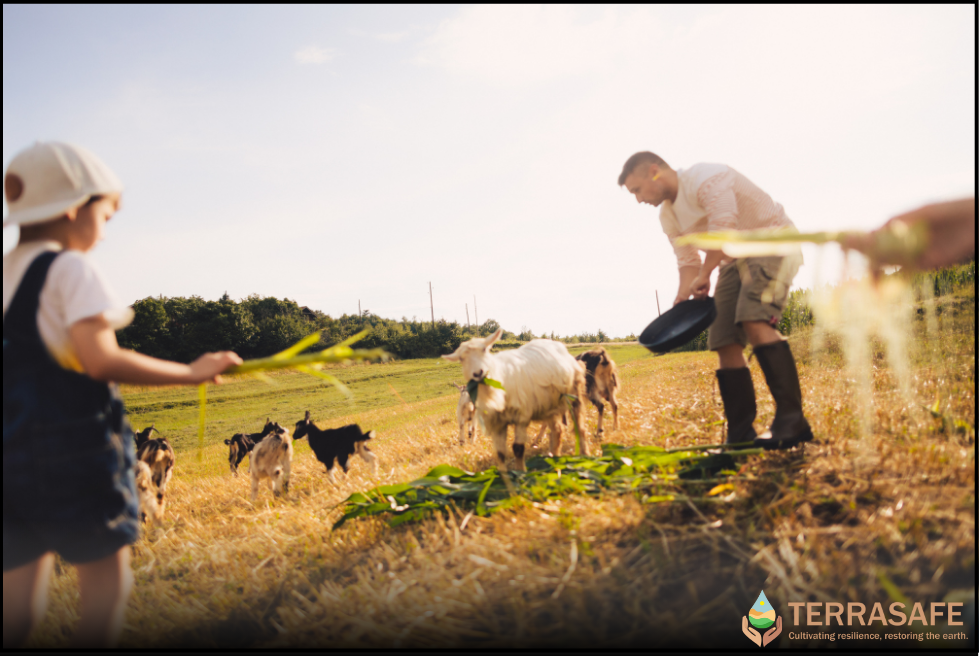
Rural depopulation is driving desertification across southern Europe, exacerbating the decline of livelihoods and the environment.
In this blog, Rosanna Salvia and Giovanni Quaranta offer solutions to depopulation-driven desertification that go beyond technical fixes to revive rural economies and landscapes.
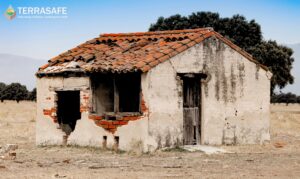
As discussed in our earlier blog, Depopulation as a driver of desertification, with the loss of these people, we also lose knowledge of how to sustain vibrant agricultural landscapes. And so, the land they leave behind turns barren and lifeless. Local poverty is further exacerbated, wider food security is threatened, and nature suffers.
To counteract these trends, policies must look beyond technical fixes to desertification and address the root socio-economic causes — including depopulation, land abandonment, and the erosion of traditional knowledge systems.
Technical solutions, like soil restoration or reforestation (also investigated by TERRASAFE), play a vital role in stabilising ecosystems. However, their effectiveness may be short-lived in areas suffering from long-term depopulation unless they are paired with strategies that revive rural economies and re-empower local communities.
Revitalising rural economies, supporting young farmers, valuing traditional knowledge, and integrating land management into broader territorial strategies are all critical. Innovative rural development frameworks that prioritise participation, sustainability, and place-based approaches are essential to mitigate the effects of land abandonment and to build climate-resilient futures.
This blog talks you through specific strategies that policymakers can use to achieve these goals.
Recommendations for managing depopulation-driven desertification
Revitalising rural economies
Incentivise sustainable agriculture
Public support mechanisms should encourage young people to return to rural areas, offering subsidies for organic farming, permaculture, or climate-smart agriculture. Financial and technical support can make rural living both viable and attractive (Kallis & Giorgos, 2010).
Develop agri- and eco-tourism models
Integrating tourism into traditional agricultural landscapes can offer alternative sources of income. Promoting agritourism not only sustains cultural heritage but also creates jobs and fosters community pride in natural and built environments (MIO-ECSDE Reports).
Policy and infrastructure investments
Invest in landscape restoration
Governments should fund large-scale, community-based land rehabilitation projects that integrate traditional ecological knowledge with new technologies. Measures might include reforestation, erosion control, and restoration of historic water systems (UNCCD, 2019).
Enhance connectivity and digital services
Providing high-speed internet, telehealth services, and online education platforms can reduce rural isolation and make countryside living compatible with modern lifestyles. These investments are crucial in reversing migration trends and reinvigorating local economies (EU, 2019).
Community-based solutions and social innovations for reviving rural territories
In the face of growing land abandonment and desertification across rural Mediterranean and eastern European regions, community-based solutions and social innovations are proving essential to sustainable, inclusive pathways forward. These approaches reimagine traditional top-down policies by placing local knowledge, participation, and socio-economic empowerment at the heart of territorial regeneration.
Engage local communities in land management
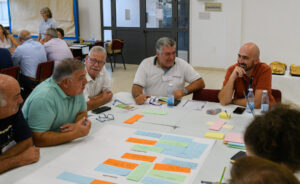
One of the cornerstones of this strategy is the active involvement of local communities in land management practices. As rural populations shrink and age, the disconnection between people and land widens. To reverse this trend, bottom-up participatory programmes that focus on sustainable agriculture, agroecology, water management, and landscape restoration can play a transformative role. Projects that train and engage citizens—especially young people and women—in these practices not only restore ecological balance but also reforge community ties and shared responsibility for the land (Pretty & Smith, 2004; FAO, 2019; Dargan & Shucksmith, 2008).
Promote circular economy models
Another powerful dimension of social innovation lies in the development of circular economy models tailored to rural contexts. These models promote local production and consumption loops, reducing dependence on external markets, and create resilient, self-sufficient economies. Initiatives such as community-supported agriculture (CSA), local food cooperatives, and renewable energy cooperatives not only lower carbon emissions but also generate meaningful employment, helping to stem rural depopulation (Kirwan et al., 2013; European Commission, 2020).
Social innovation as a lever for territorial cohesion
Social innovations in rural settings often arise from grassroots responses to systemic neglect. They are embedded in networks of trust, identity, and reciprocity that are often stronger in small communities than in urban areas. When properly supported through policies and funding, these innovations become vehicles for territorial cohesion, ensuring that no region is left behind in the green and digital transitions (Neumeier, 2012). Crucially, these approaches also help counteract the loss of social capital—such as personal relationships—that accompanies land abandonment. By rebuilding communal institutions, cooperatives, and intergenerational knowledge-sharing networks, social innovations restore both the ecological and the social landscapes of marginal areas.
Conclusion: we can break the vicious cycle of depopulation and desertification
Rural depopulation is unravelling the cultural and environmental fabric of Mediterranean rural territories, compromising their long-term resilience. However, this trajectory is not irreversible.
A comprehensive response that combines rural economic revitalisation, sustainable land management, and inclusive territorial policies can help to break the vicious cycle of depopulation and desertification. In particular, community-based solutions and rural social innovations offer promising pathways.
To achieve lasting impact, such initiatives must be supported by coherent and forward-looking policies. Integrating them into broader frameworks for rural development, climate adaptation, and regional cohesion is essential.
Local knowledge and engagement are critical to our work on the TERRASAFE project, where we work directly with rural communities in the Mediterranean. Together, we want to ensure that solutions to desertification are not only effective on a technical level, but that they are also owned and sustained by those who live on and manage the land.
Only through coordinated, place-based, and inclusive approaches can Mediterranean rural areas be reimagined as vibrant, resilient, and sustainable spaces—not relics of the past, but foundations for a more equitable and climate-resilient future.
About the Authors
Professor Rosanna Salvia and Professor Giovanni Quaranta of the University of Basilicata (Italy) are evaluating policies in relation to desertification for TERRASAFE and managing two pilot areas for testing innovations in Italy: https://terrasafe.eu/italy-pilot/.
 |
Rosanna is an agricultural economist whose work explores how land degradation affects rural livelihoods and how communities can lead sustainable development efforts. Her research focuses on the socio-economic drivers of land abandonment, the resilience of rural areas, and participatory approaches to territorial regeneration.
|
 |
Giovanni’s research focuses on sustainable natural resource management, with an emphasis on economic-environmental trade-offs in policy and land use. His work also explores EU-driven rural and local development strategies, contributing to evidence-based policymaking. |
References
Dargan, L., & Shucksmith, M. (2008). LEADER and innovation. Sociologia Ruralis, 48(3), 274–291. https://doi.org/10.1111/j.1467-9523.2008.00463.x
European Commission. (2019). Report on the Impact of Demographic Change. Brussels: European Union.
European Commission. (2020). A New Circular Economy Action Plan for a Cleaner and More Competitive Europe. Brussels: European Union.
Kallis, G., & Giorgos, V. (2010). Integrated water and land management in the Mediterranean. Ecological Economics, 69(5), 930–939.
Kirwan, J., Ilbery, B., Maye, D., & Carey, J. (2013). Grassroots social innovations and food localisation: An investigation of the Local Food programme in England. Global Environmental Change, 23(5), 830–837. https://doi.org/10.1016/j.gloenvcha.2012.12.004
MIO-ECSDE. (2017). Rural Depopulation and Sustainable Development in the Mediterranean Region. Athens: Mediterranean Information Office for Environment, Culture and Sustainable Development.
Neumeier, S. (2012). Why do social innovations in rural development matter and should they be considered more seriously in rural development research? Sociologia Ruralis, 52(1), 48–69.
Pretty, J., & Smith, D. (2004). Social capital in biodiversity conservation and management. Conservation Biology, 18(3), 631–638.
UNCCD. (2019). The Global Land Outlook. Bonn: United Nations Convention to Combat Desertification.