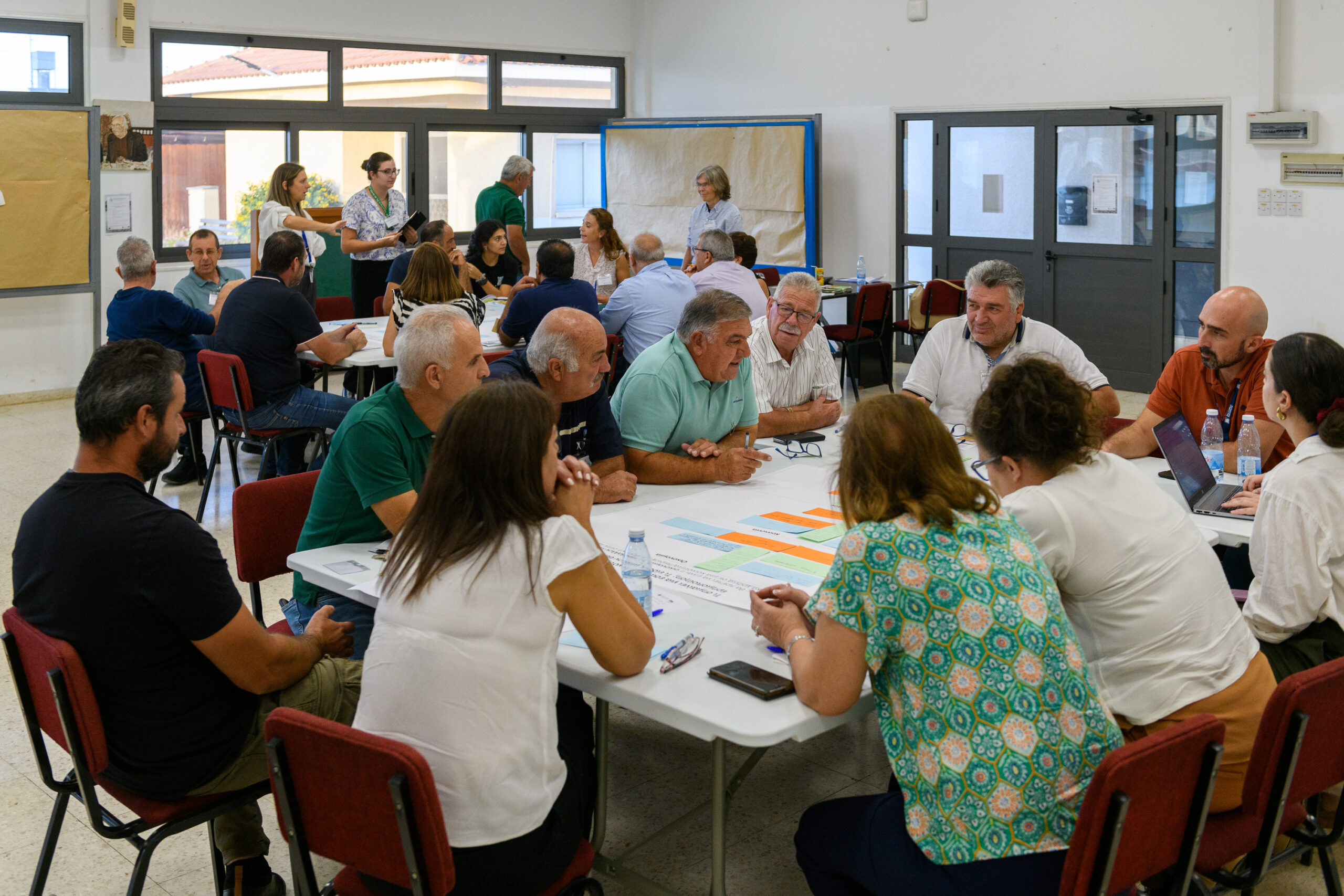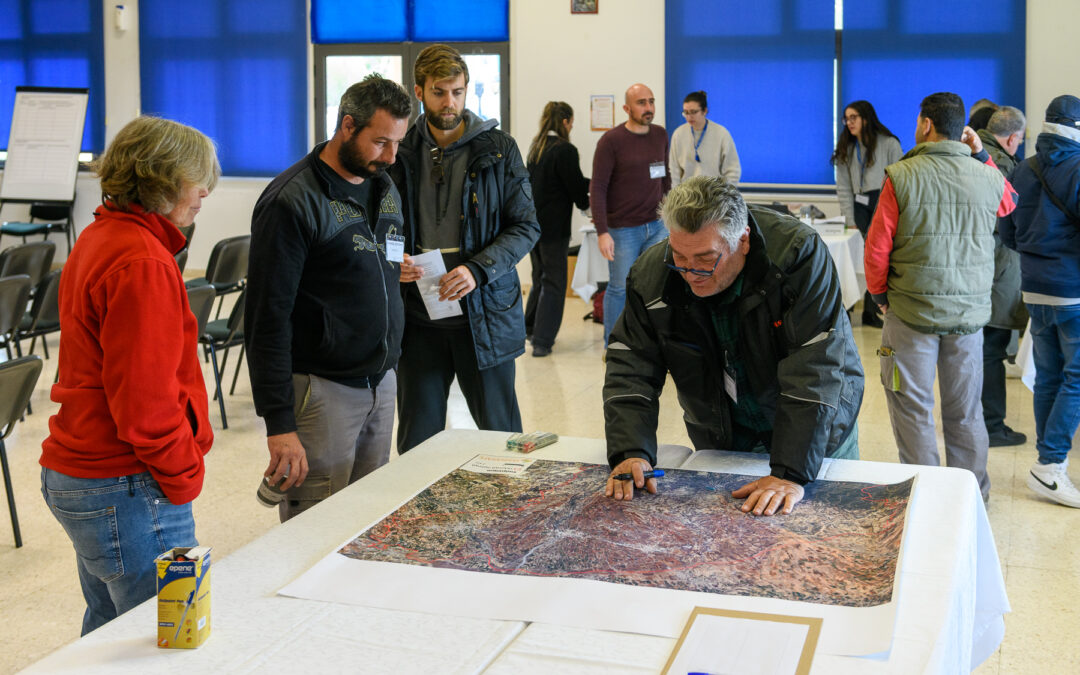
In February 2025, 88 community members and researchers gathered at workshops to help shape TERRASAFE’s efforts in combatting desertification. Held across six locations in Cyprus, Italy, Romania, Spain, and Tunisia, the workshops brought together farmers, foresters, community group members, researchers and local authority staff.
These events provided a platform for those directly affected by desertification to share their expertise on local environmental conditions with TERRASAFE researchers and to help guide the course of the project.
Together with the attendees, TERRASAFE researchers discussed plans for identifying and implementing the most effective measures to tackle desertification, and how they could best engage with one another as the project progresses.
The events were an excellent opportunity for TERRASAFE to learn more about the local context of desertification in each region – information that is essential to ensuring the success of anti-desertification efforts. For example, in Italy, participants highlighted the impact of rural depopulation as a key concern. In Spain, the devastating 2024 floods in Valencia brought attention to the links between extreme weather and desertification.
A key feature of the workshops was the presentation of TERRASAFE’s desertification mapping app, which was met with great interest. Attendees acknowledged the value of the app for large-scale mapping and identifying bigger trends. But they also emphasised the importance of on-the-ground observations for understanding what is happening at the local level. For example, individual fields change land cover throughout the year, which makes it difficult to assess long-term trends solely through snapshot imagery.
Participants further expressed huge enthusiasm for TERRASAFE’s five proposed solutions for combatting desertification, while also raising important questions about their feasibility. Discussions covered costs, practicality, and local preferences. Considerations around the measures included the frequency of application and whether locally produced products would be preferable to imported ones. Additionally, attendees pointed out gaps in the selection of approaches—while some of the measures help retain soil moisture, for example, others will be needed to address water supply shortages.
TERRASAFE extends huge thanks to all workshop participants and coordinators. Their contributions are invaluable in shaping the project’s approach to desertification, benefiting not only their own communities but also others facing similar challenges worldwide.