
Agrodit Crop guardian soil sensors and app
Agrodit sensors
Agrodit provides its users with real-time data direct from their soils, allowing them to respond to sub-optimal environmental and soil conditions before visual symptoms appear.
Many agronomists install Agrodit sensors at the start of each crop cycle to track moisture, salinity and temperature throughout the growing season. The sensors stay in place throughout the crop cycle, with users receiving alerts when soil or plant stress occurs.

This innovation is being tested in Romania and Spain.
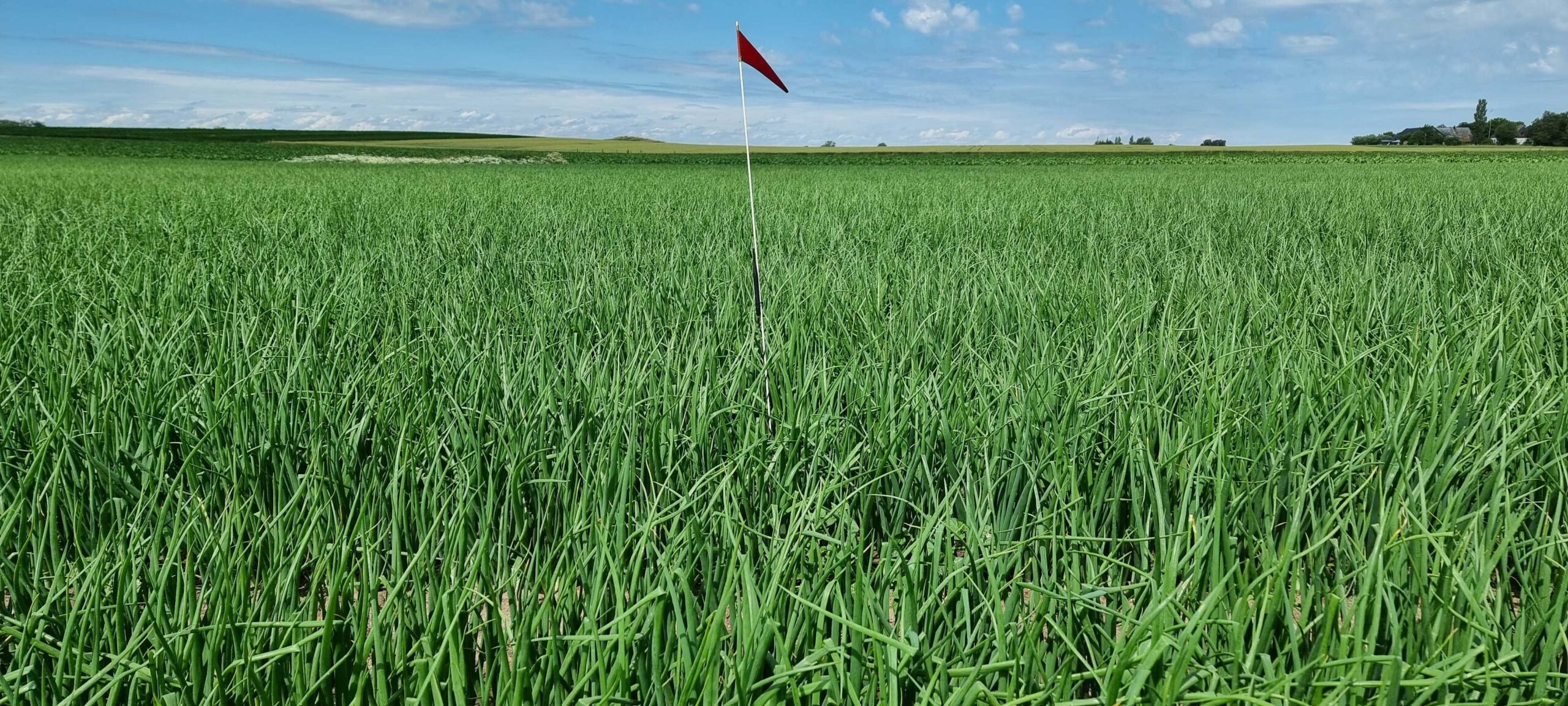
Agrodit in an onion field
Agrodit are currently working with the biggest onion producer from Sweden, who is based in the south part called Skåne. In this area, the soil is quite sandy compared to other regions which affects the water retention and the need of active irrigation during summer period. Agrodit plays an important role determining the best moment for irrigation and avoiding wilting point to be reached while reducing the amount of water spent. For these types of crops, an external antenna is used that the farmer attaches to a location flag, allowing wireless communication distances of up to 10km.
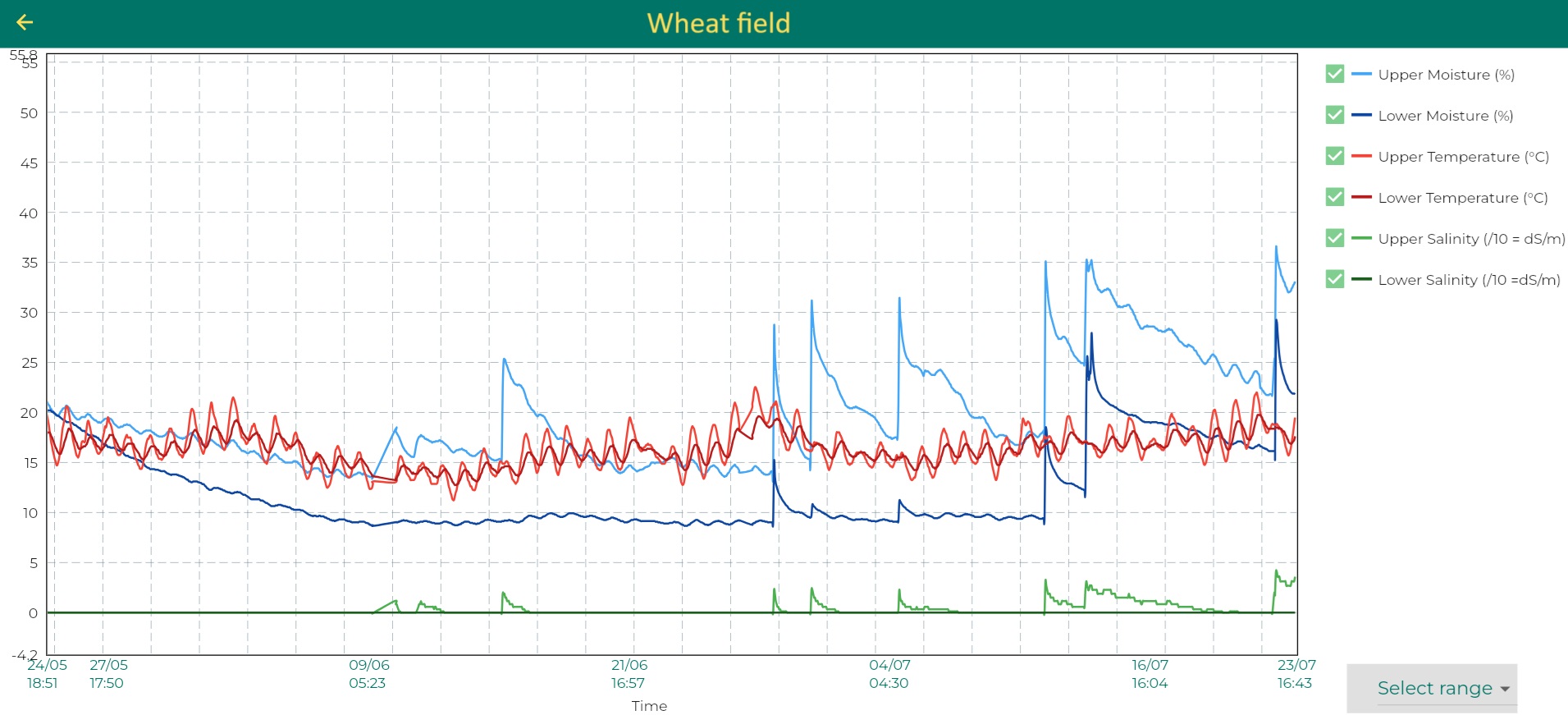
Agrodit wheat field
This is an example of the Agrodit dashboard. The data is shown in a time chart where is easy to visualize temporal changes in all variables measured by the sensor. The moisture from different depths can be compared to understand how temperature or water intake from the plants affects how the moisture reaches deeper layers in the soil. This way, its possible to increase/decrease volume of following irrigations accordingly.
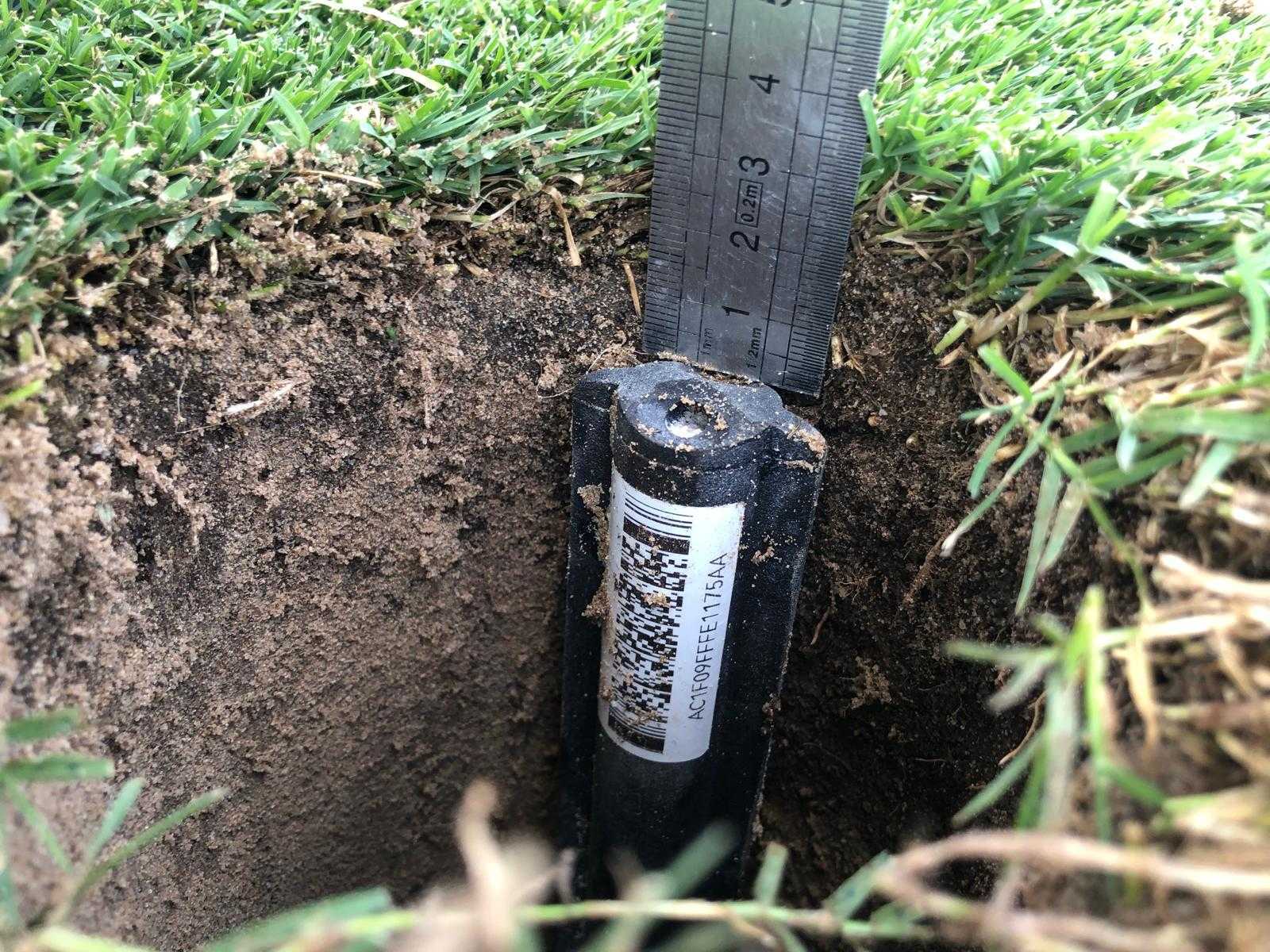
Agrodit turf field
An internal integrated antenna is used in grassy areas such as golf courses. Here, the sensor is buried to keep it hidden from view. Even after being buried, Agrodit sensors can reach communication distances of 2km with this method.
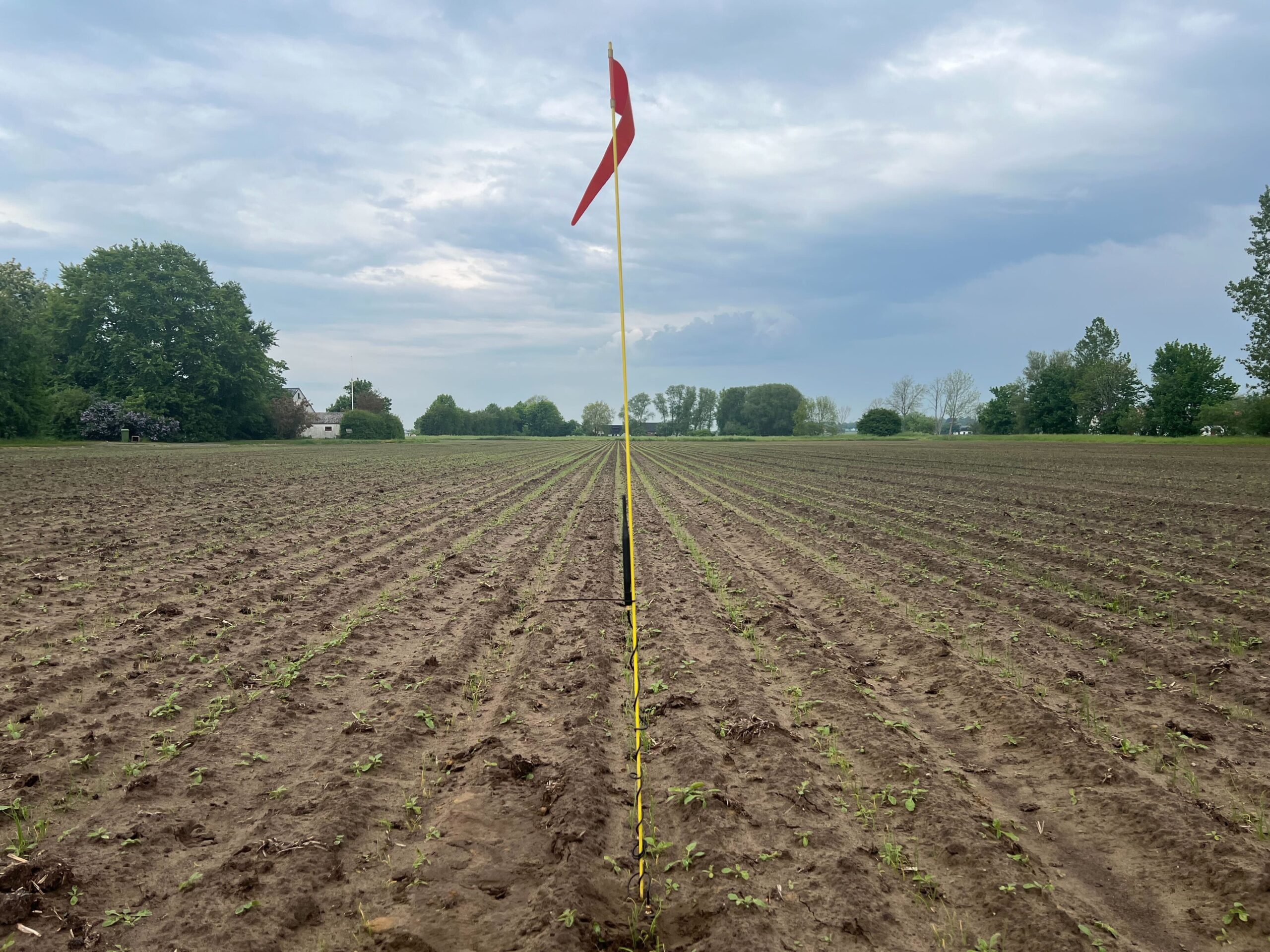
Agrodit onion field
Agrodit are currently working with the biggest onion producer from Sweden, who is based in the south part called Skåne. In this area, the soil is quite sandy compared to other regions which affects the water retention and the need of active irrigation during summer period. Agrodit plays an important role determining the best moment for irrigation and avoiding wilting point to be reached while reducing the amount of water spent. For these types of crops, an external antenna is used that the farmer attaches to a location flag, allowing wireless communication distances of up to 10km.

Agrodit – aromatics
An internal integrated antenna is used in grassy areas such as golf courses. Here, the sensor is buried to keep it hidden from view. Even after being buried, Agrodit sensors can reach communication distances of 2km with this method.
View some of our latest news!

Desertification and soil salinisation in Tunisia: why does it happen and what’s the solution?
Excessively salty soil is one of the biggest threats to agriculture and food security. In this blog, Dr Nissaf Karbout explains why soil salinisation is degrading critical cropland in Tunisia and considers what the future holds for farmers in the region. Globally,...

Carob – a future-food that can grow in dryland areas
By Dr Charlotte Chivers Summary: Carob, a drought-tolerant Mediterranean tree, is gaining attention as a climate-resilient crop for drying regions where traditional agriculture is struggling. Mature trees survive on minimal rainfall and poor soils, though seedlings...

DesertNet International showcases science-based innovations for monitoring land degradation and desertification
At CRIC23, held on 4 December 2025, DesertNet International gathered leading scientists, policy experts and UNCCD representatives for a session on emerging approaches to monitor land degradation and desertification risks (LDD) and to assess restoration efforts. The...